October 2, 2026
NASHVILLE, Tenn. — Most Protestant churchgoers spend time alone with God at least daily, but there’s a range in what they do in that time and what resources they use.
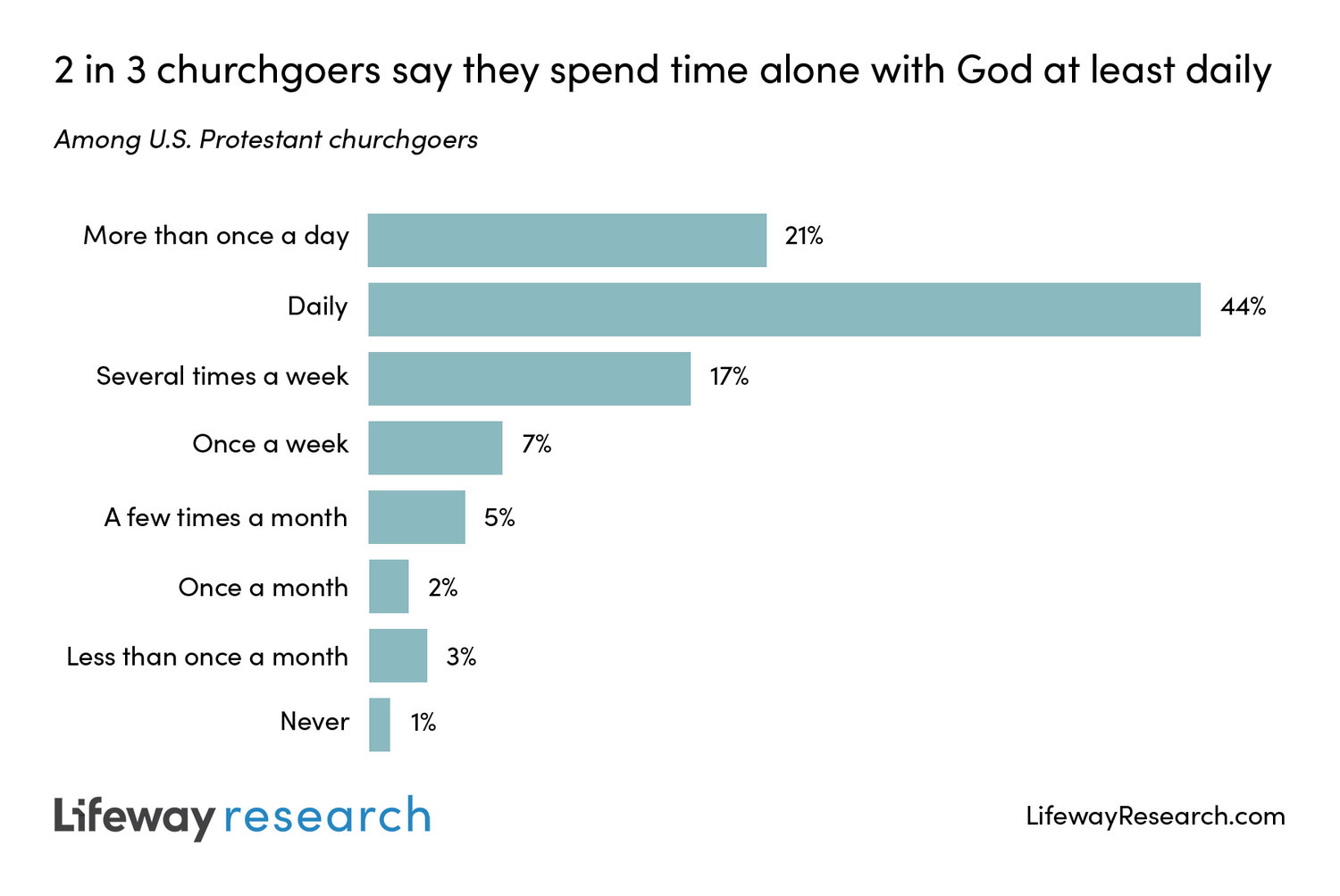
According to a study by Lifeway Research, nearly 2 in 3 Protestant churchgoers intentionally spend time alone with God at least daily, with more than 4 in 10 saying they do so daily and more than 1 in 5 saying they do so more than once a day.
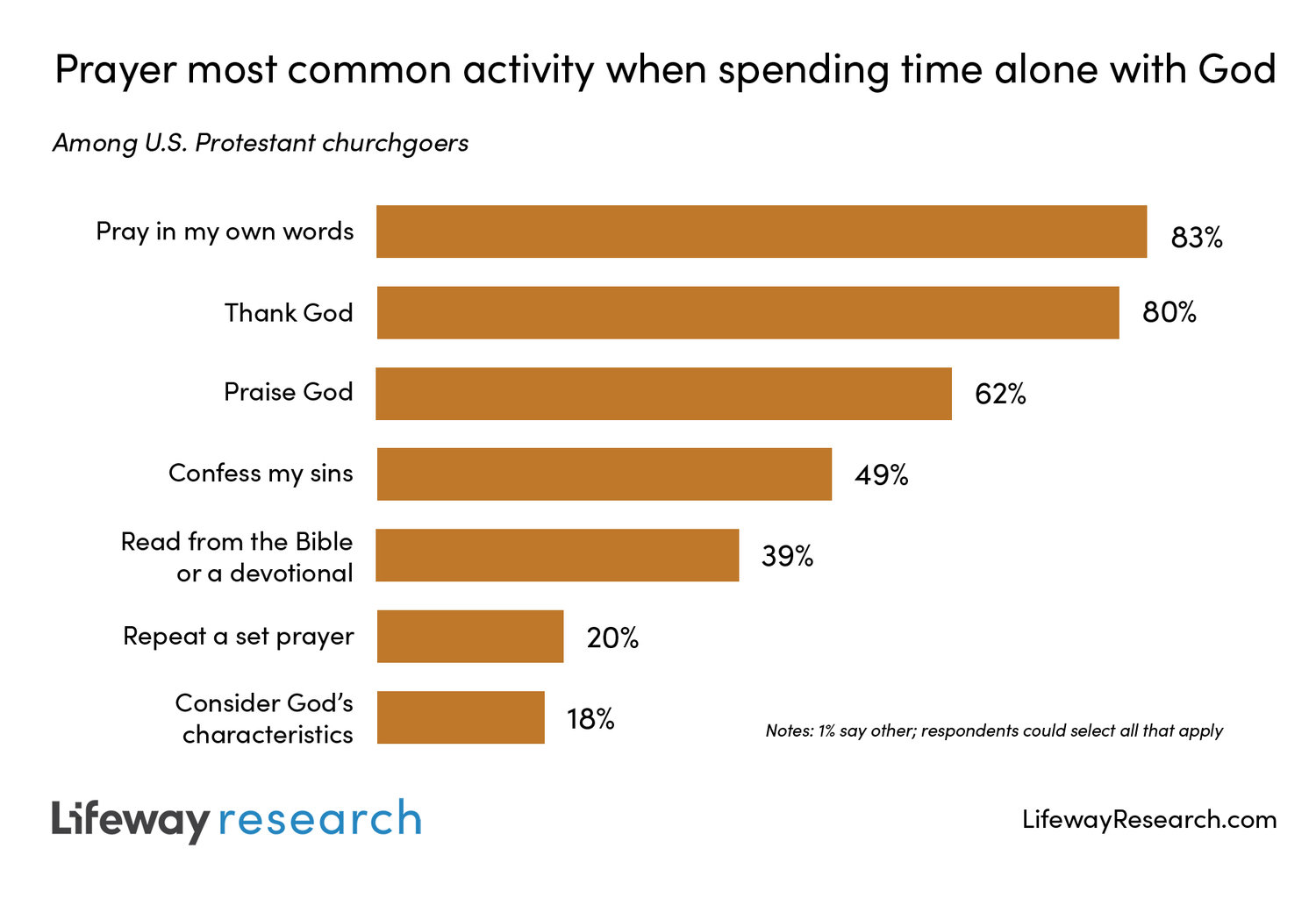
That time spent with God looks different for different churchgoers, but they are more likely to talk to God through prayer than to listen to Him through His Word. Churchgoers most often pray in their own words, thank God, praise God, or confess sins. But, fFewer than 2 in 5 read from the Bible or a devotional,.
Churchgoers that read during their time alone with God mostly read from a physical Bible (63%). Others read the Bible in a different format, such as a Bible that includes additional commentary or devotional thoughts (25%) or Scripture from an app (20%). Fewer than 1 in 3 say they read from a devotional book that prints some Scripture, and even fewer say they read from a devotional book that doesn’t print Scripture.
Quiet time frequency
When it comes to spending time alone with God, females are more likely than males to say this is a daily habit for them. Nearly half of churchgoers in the South say they spend time alone with God on a daily basis. One in 4 Baptists say they have alone time with God more than once a day. And those with evangelical beliefs are more likely than those without evangelical beliefs to say the same.
Church attendance is also an indicator of quiet time frequency. More than a quarter of those attending worship services at least four times a month say they spend time alone with God more than once a day.
“We see a pattern in Scripture of followers of God withdrawing to spend time alone with Him. Jesus Christ Himself also did this,” said Scott McConnell, executive director of Lifeway Research. “Most Protestant churchgoers continue this relational interaction with God and use a variety of resources as they do.”
Preferences on prayer
When spending time alone with God, some prefer to pray in their own words, while others would rather repeat a set prayer. Younger churchgoers—ages 18-49—are more likely than those 50 and over 65 to say they repeat a set prayer during their alone time with God. And those ages 50 and over are more likely to say they pray in their own words.
“There are many reasons to pray a set prayer. Whether someone is praying the model prayer Jesus gave or repeating the same request to God each day, these can be meaningful,” McConnell said. “At the same time, Scripture also records Psalms and prayers within its narrative accounts that show how personal and forthright we can be when talking to God in our own words.”
Females are slightly more likely than males to pray in their own words. And those in the South are likewise slightly more likely to pray in their own words than those in the Northeast.
Preferences on practice
What it means to spend time alone with God varies from person to person. But there are some indicators of which practices are most important to different demographics of people. While females are more likely than males to say they praise God or read from the Bible or a devotional, men are more likely than women to say they consider God’s characteristics when spending time alone with Him.
Evangelical beliefs and church attendance frequencies are also indicators of a person’s preferences in spending time alone with God. Those who attend worship services the most (four or more times a month) are more likely than those who attend one to three times a month to praise God. And those who hold evangelical beliefs are more likely than those who do not hold evangelical beliefs to thank God.
“An earlier discipleship study from Lifeway Research showed that praising and thanking God is one of the top five predictors of high spiritual maturity,” McConnell said. “This is a widespread practice among churchgoers when they are alone with God.”
Preferences on resources
Several factors play into what a churchgoer wants to read when spending time alone with God. The youngest adult churchgoers (ages 18-34) are the most likely to read Scripture from an app and the least likely to read from a devotional book that prints some Scripture. And females are more likely than males to say they would prefer to read a devotional from an app.
“Today’s Christians have more resources than ever to aid them in spending time with God and His Word,” McConnell said. “As new resources are created, they can encourage someone who, without that innovation, wouldn’t have spent time with God. But there is also a strong relationship between spending time alone with God’s Word and worshiping frequently with others who may encourage you in your walk with God.”
Share with others