October 2, 2026
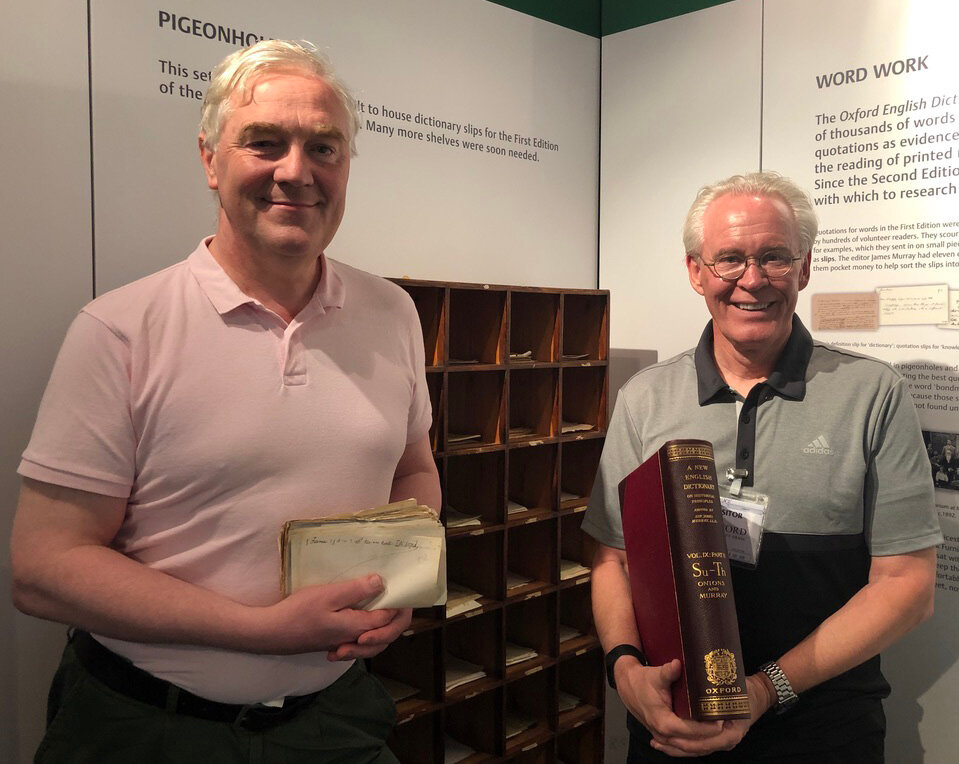


Next summer, students from Truett McConnell University will travel to London, Oxford, and Canterbury to explore the roots of their mother tongue in a new course designed by TMU’s Chair of the School of Communication, Dr. Barry McCarty. English Life, Letters, and Language will explore the key people and places that have shaped English-speaking culture.
The Christian Index spoke with Dr. McCarty, who is in England this summer preparing the itinerary for next June. “Much of the world’s greatest literature,” McCarty said, “Shakespeare, Charles Dickens, Jane Austen, Tolkien, C.S. Lewis, the King James Bible—is written in the language you are now reading. English is the most widely spoken tongue on Earth. What Greek was to the classical age, and Latin to the Middle Ages, English is to the 21st century. Moreover, the great Western political ideas that invented the modern world—representative government, the rule of law, free markets, and individual freedom—are a magnificent heritage that English-speaking peoples have given to the world.”
The design of the TMU course follows Dr. McCarty’s philosophy that students develop a lifelong love of learning by visiting places they read about and reading about places they visit—in this case the birthplace of the English language. Prior to their departure for England, students will complete a reading list of books about people and events associated with the places they will visit. Following the trip, each student will write a term paper on a topic, person, place, or event that most sparked their interest.
We asked Dr. McCarty to describe some of the points of interest that students will read about and see. “Westminster Abbey tops the list,” McCarty replied. “Built by the last Anglo-Saxon king, Edward the Confessor, it has been the coronation church for British kings and queens since the Norman Conquest in 1066, including this year’s coronation of King Charles III. Students will see the final resting place of many of the monarchs and other notable Britons they have read about, including over a hundred poets and writers who are buried or commemorated in Poet’s Corner. The Abbey was also one of the sites for the translation of the King James Bible.”
While in London, students will see some of the world’s most significant books and documents on exhibit at the British Library: the 1215 Magna Carta, original drafts of Shakespeare’s plays, and the original score of Handel’s Messiah. “The British Library is awe-inspiring,” McCarty said. “Readers of Jane Austen’s Pride and Prejudice or Sense and Sensibility can see her writing desk. Lovers of Charles Dickens can see originals of his novels. Even some of the greatest biblical manuscripts are on view—Codex Sinaiticus, Codex Alexandrinus, and the Tyndale New Testament. During their time in London, the group will also visit the British Museum, Charles Dickens’ home, Shakespeare’s Globe Theater, the Tower of London, and other sites.
“At Oxford,” McCarty continued, “we will explore the archives at Oxford University Press—home of the great Oxford English Dictionary—tour C.S. Lewis’s home, and eat a meal at The Eagle and Child pub, where Lewis, Tolkien and The Inklings used to gather to discuss their writing.”
The tour’s final stop, Canterbury, has been the seat of the Anglican church both before and after the English Reformation. Students will see where Augustine of Canterbury landed in 597 with 40 monks on his mission to bring Christianity to Anglo-Saxon England. Although the 11th-century Canterbury Cathedral dominates the landscape, the city is also the site of Augustine’s Abbey and St. Martin’s Church, an ancient chapel in Roman Briton and the initial site for Augustine’s sixth-century mission. It is the oldest existing parish church in the English-speaking world.
English Life, Letters, and Language looks to be a rich academic experience for Truett McConnell students. When Dr. McCarty proposed it as a new communication elective, the idea was so well received by the faculty that they also approved it as an elective in English, history, and general humanities. Students may take the class for three hours credit in any one of those four fields, or add another three hours in a second field with additional reading and writing assignments. The study trip is planned for June 2024.
Share with others


