October 1, 2026

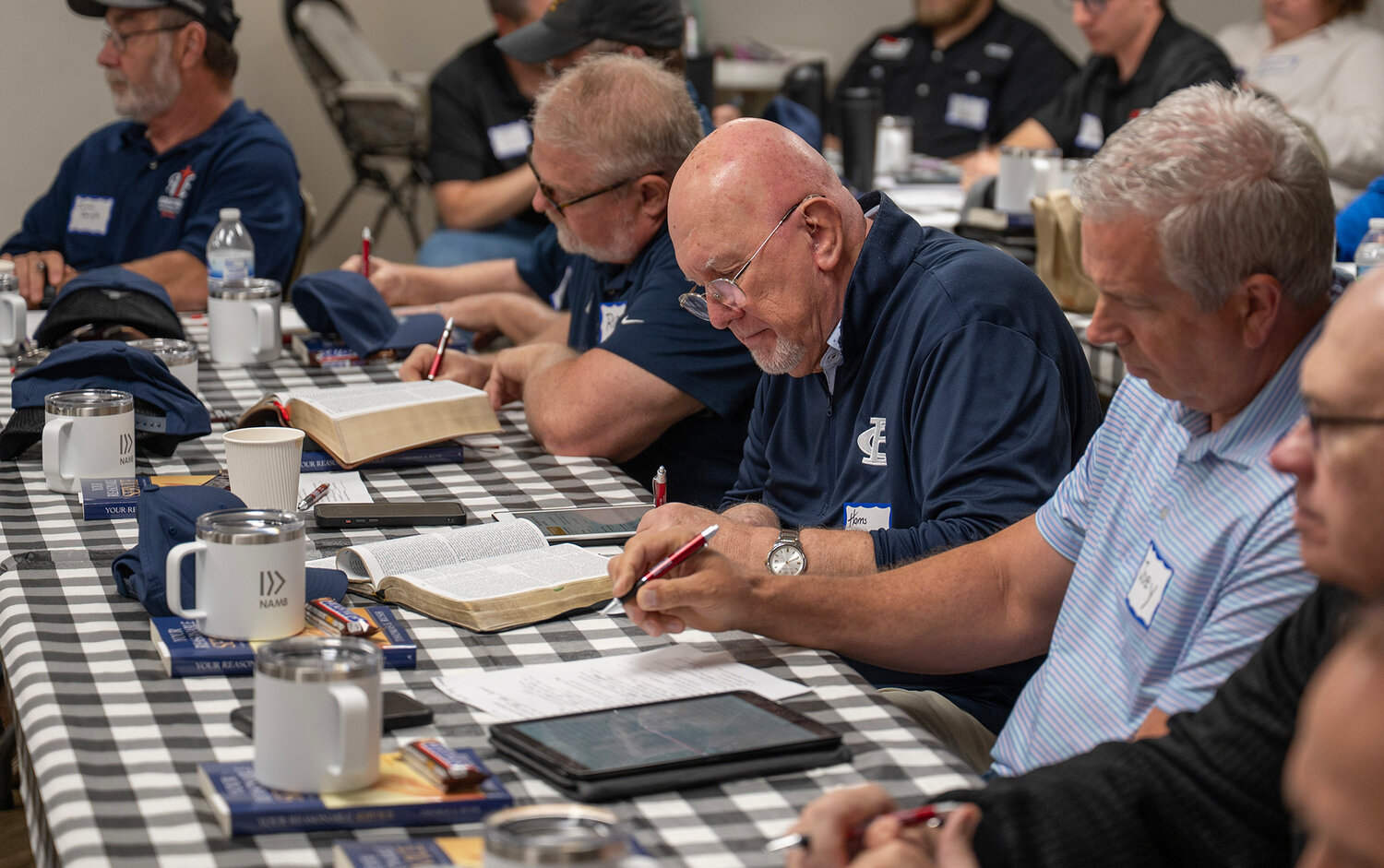


MONROE, Ga. — More than 100 Georgia pastors stepped away from sermon preparation, staff meetings, and hospital visits on Monday to talk honestly about how to keep going in ministry.
Tommy Fountain, Sr., senior pastor of 1025 Church in Monroe, organized and hosted the “lunch and learn” event, attended by 115 pastors and ministry leaders. He said the gathering grew out of his own desire to provide the kind of encouragement he received decades earlier. “I just have a heart for pastors,” Fountain said, explaining that he wanted to create something for men carrying heavy loads week after week.
The speakers, who addressed topics related to longevity in ministry, included Larry Wynn, executive director of the Georgia Baptist Health Care Ministry Foundation and longtime pastor of Hebron Baptist Church; Tim Dowdy, vice president of evangelism at the North American Mission Board; and Fountain. Chris Conner, associational mission strategist for the Apalachee Baptist Association, offered brief encouragement as well.
Wynn opened with a reminder from Acts 20:28 and 1 Peter 5:2-4 that pastors are called to shepherd God’s flock, not their own. “The consistent metaphor of Acts and 1 Peter is not CEO and is not celebrity,” Wynn said, “but a shepherd.” He warned that churches can drift into corporate models of leadership that don’t fit Scripture’s picture of pastoral ministry.
Wynn framed longevity around two pastoral responsibilities: leading yourself well and leading your people well.
To lead yourself well, Wynn said, pastors must be trustworthy, dependent on the Lord, eager to serve rather than driven by personal gain, and relatable to their people. Wynn urged pastors to anchor their leadership in dependence on God rather than platforms, personalities, or tools. “The greatest counsel you will ever receive to be the leader God called you to be is from the Lord himself,” he said. “Spend time with him.”
He also encouraged pastors to cultivate real relationships with their congregations and communities. “If they don’t know you, they’ll never trust you,” Wynn said. “If they don’t trust you, they won’t follow you for very long.”
To lead people well, Wynn urged pastors to let calling, not compulsion, drive ministry, recognize the value of every person in the flock, teach truth with clarity, and care for people with consistent compassion
Wynn closed by reminding pastors that preaching is part of shepherding, but not the whole of it. “Shepherd your people,” he said. “Just care for them. Just love them. Laugh with them. Cry with them. Spend time with them.”
In brief remarks, Conner encouraged pastors not to underestimate the long arc of faithfulness. He told of a recent hospital visit where a woman recalled a prayer he offered years earlier in a restaurant, an interaction she said God used as a turning point, even though she had been “mad at Jesus” and wounded by past experiences.
Conner’s point to pastors was simple. “You as a pastor, and you as a staff,” he explained, “there are people in your community watching you, and you don't even have a clue. And you can make a difference in their lives.”
Next, Tim Dowdy opened with a quick set of evangelism tools before turning to the day’s theme of long-term ministry health. “No matter where you go in North America…at least 70% of the population needs to know Jesus,” Dowdy said. He urged pastors to make evangelism personal, referencing North America’s vast lostness and the temptation to let the scope of the task be overwhelming
Addressing the event theme, Dowdy said, “Longevity is God’s business.” He went on to tell listeners that, “The question is not is He with us?” Dowdy said. “The question is, are we with Him?”
Reading from Philippians 3, Dowdy described devotion not as an item to check off, but as closeness to Christ that sustains a pastor through the long haul. “What needs to occupy the deepest place of our souls is that our number one passion is that I would know Him, that I would know Jesus,” he said.
Dowdy offered several simple headings for devotional life to help keep pastors centered when ministry demands multiply:
From there, Dowdy offered practical guidance on personal growth aimed at helping pastors stay healthy and useful over time. He encouraged pastors to look back to salvation and calling, listen well, follow close, be honest in assessing life and ministry, be present, be careful with both criticism and praise, have friends outside the church where life can be an open book, take breaks with regularity, and always learn.
Fountain closed the gathering with what he called practical guidance for how to go the distance, offering seven guidelines for pastors who want to maintain effectiveness in ministry.
First, Fountain said, pastors need a clear strategy rooted in evangelism. “Keep the main thing, the main thing,” he said, defining that as “winning people to Jesus Christ.”
“I do get concerned when I hear churches talk about discipleship and never talk about evangelism,” Fountain said. “You cannot disciple lost people.”
Second, he urged pastors to surround themselves with young people as a necessity for growth and perspective. “If you stop learning, you will stop leading,” Fountain said, adding that young adults are “not the church of the future, they are the church of today.”
Third, Fountain encouraged pastors to stay current without compromising. “The message never changes, but the methods must,” he said, urging leaders to think in terms of upgrading rather than simply “change.”
Fourth, Fountain called pastors to support missions, in particular those that reach the local community, where churches can make a great impact in reaching the lost. He encouraged those present to celebrate what God is doing through baptisms. “Get so enthused about seeing somebody get saved,” he said. “Make a big deal about it.”
Fifth, he urged pastors to stand strong biblically, warning against replacing Scripture with commentary. “You cannot stand the test of time if you do not stand on truth,” he said.
Sixth, Fountain emphasized vision, saying people can endure hard seasons when they understand where they are going.
Finally, Fountain urged pastors to stay focused, pointing them back to their calling, their competence, and their faith. “One day we won’t be measured by how big our church was, or even how many people knew our name,” he said. “But this is how we will be measured: did we finish well?”
Share with others


