October 2, 2026
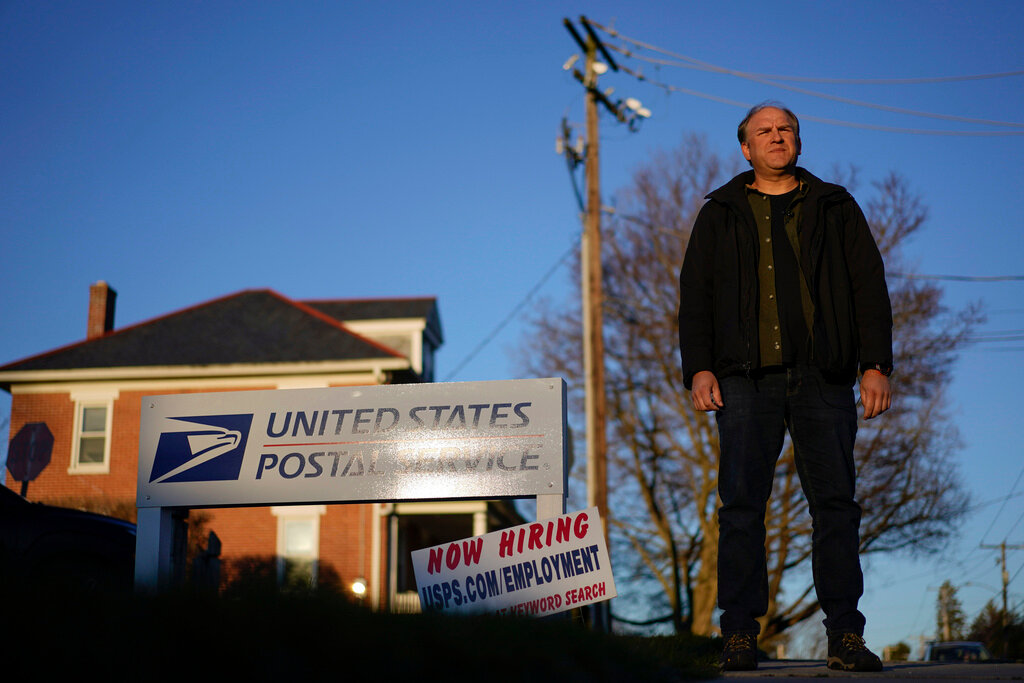
WASHINGTON (AP) — The Supreme Court on Thursday used the case of a Christian mailman who didn't want to work Sundays to solidify protections for workers who ask for religious accommodations.
In a unanimous decision the justices made clear that workers who ask for accommodations, such as taking the Sabbath off, should get them unless their employers show doing so would result in “substantial increased costs” to the business.
Brent Leatherwood, president of the Southern Baptist Convention’s Ethics & Religious Liberty Commission, applauded the decision. "By siding with [Gerald Groff], the court has again affirmed the importance of living in accordance with one’s deepest-held beliefs," Leatherwood said. "This is a victory for every American. Your profession of faith should not be a barrier to your professional vocation.”
The court made clear that businesses must cite more than minor costs — so-called “de minimis” costs — to reject requests for religious accommodations at work. Unlike most cases before the court, both sides in the case had agreed businesses needed to show more.
In the case before the court, Groff, a mail carrier in rural Pennsylvania, was told that as part of his job he’d need to start delivering Amazon packages on Sundays. He declined, saying his Sundays are for church and family. U.S. Postal Service officials initially tried to get substitutes for the man’s shifts, but they couldn’t always accommodate him. When he didn’t show, that meant more work for others. Ultimately, Groff quit and sued for religious discrimination.
The case is the latest religious confrontation the high court has been asked to referee. In recent years, the court’s 6-3 conservative majority has been particularly sensitive to the concerns of religious plaintiffs. Last year, the court split along ideological lines in ruling in favor of a public high school football coach who wanted to pray on the field after games.
Other recent religious cases have drawn wide agreement among the justices, such as upholding a cross-shaped monument on public grounds and ruling that Boston had violated the free speech rights of a conservative activist when it refused his request to fly a Christian flag on a City Hall flagpole.
In the latest case, a federal law — Title VII of the Civil Rights Act of 1964 — requires employers to accommodate employees’ religious practices unless doing so would be an “undue hardship” for the business. But a 1977 Supreme Court case, Trans World Airlines v. Hardison, says in part that employers can deny religious accommodations to employees when they impose “more than a de minimis cost” on the business.
During arguments in the case in April the Biden administration’s top Supreme Court lawyer, Solicitor General Elizabeth Prelogar, who was representing the Post Office, told the justices that the Hardison case as a whole actually requires an employer who wants to deny an accommodation to show more.
But Justice Samuel Alito wrote in his majority opinion for the court that while some lower courts have understood Hardison the way the Biden administration suggested, other courts incorrectly latched on to the “de minimis” language “as the governing standard.”
“In this case, both parties agree that the ‘de minimis’ test is not right, but they differ slightly in the alternative language they prefer. ... We think it is enough to say that an employer must show that the burden of granting an accommodation would result in substantial increased costs in relation to the conduct of its particular business,” Alito wrote.
Requests for religious accommodation come up most often when employees seek schedule changes like the Sabbath off or midday prayer breaks or exemptions from a company’s dress code or grooming policies. They also come up when an employee wants to display a religious symbol in the workplace.
As for the particular dispute in front of them, the justices sent the case back to a lower court for another look in light of their decision.
Groff said in a statement after the ruling that he was grateful the court heard his case. “I hope this decision allows others to be able to maintain their convictions without living in fear of losing their jobs because of what they believe,” he said.
The case is Groff v. DeJoy, 22-174.
___
The Index staff contributed to this report.
Share with others


