October 2, 2026
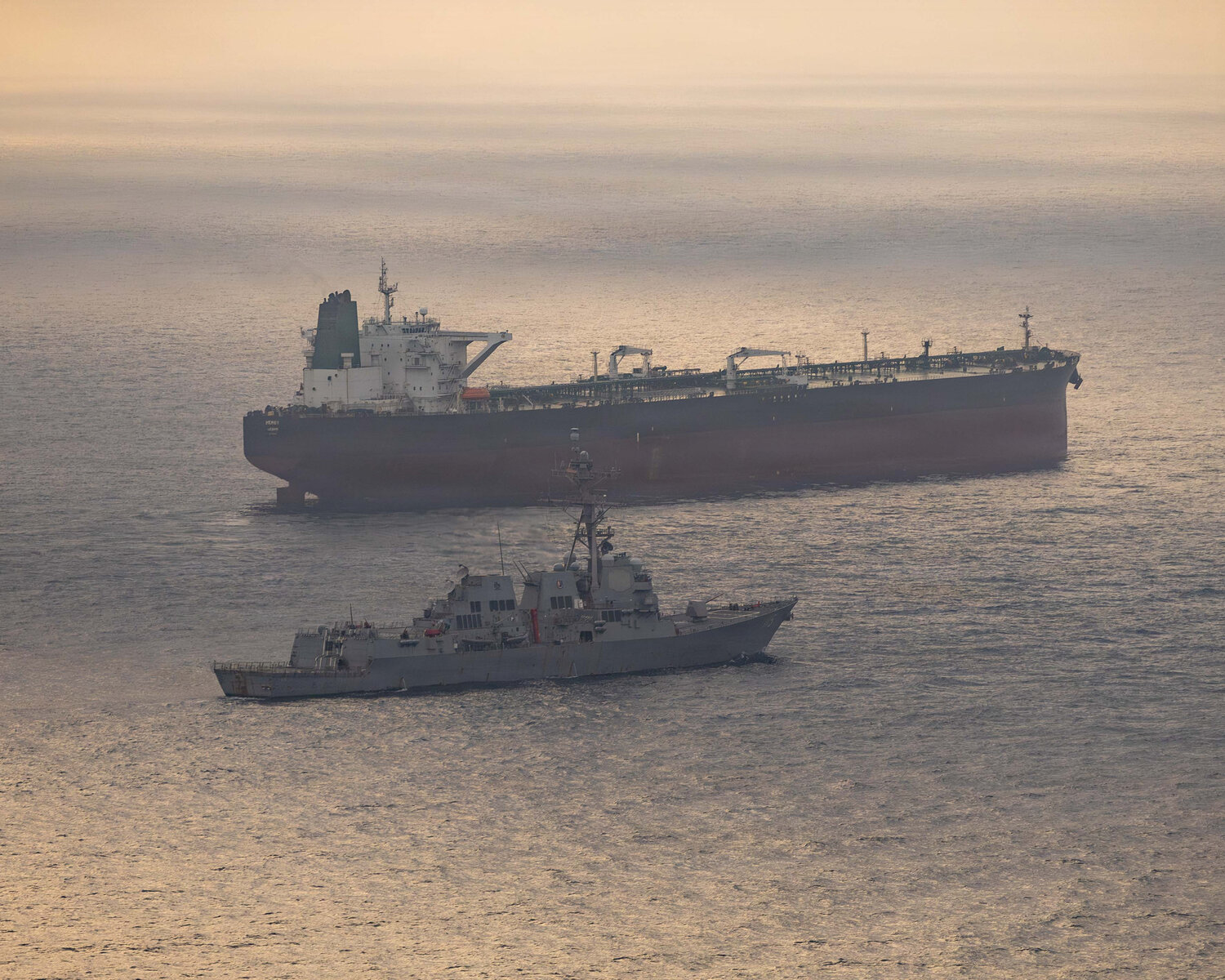
DUBAI, United Arab Emirates (AP) — A ship anchored off the United Arab Emirates was seized and taken toward Iran, and another — a cargo ship near Oman — sank after being attacked, authorities said Thursday, as tensions escalated near the Strait of Hormuz.
It wasn't immediately clear who was behind these incidents, but they happened as a senior Iranian official reiterated his country’s claim of control over the waterway and another said it had a right to seize oil tankers connected to the U.S.
The turmoil in the strait, through which a fifth of the world’s oil passed before the war, has been a sticking point for weeks in talks between the U.S. and Iran to end the conflict. Iran's grip on the vital waterway has jolted the world economy and spiked fuel prices far beyond the Middle East.
The ongoing instability in the region comes as U.S. President Donald Trump met with Chinese leader Xi Jinping in Beijing. The White House said both sides had agreed that the Strait of Hormuz must remain open.
Just last week, tensions flared in the strait when U.S. forces fired on and disabled Iranian oil tankers that it said were trying to breach its blockade of Iran’s ports.
The United Kingdom Maritime Trade Operations center said it received reports that the ship seized on Thursday was taken by unauthorized personnel while anchored 38 nautical miles northeast of the UAE port of Fujairah, an important oil export terminal that has been repeatedly attacked during the war with Iran.
The U.K. maritime center did not name the ship seized on Thursday and said it is investigating. The British military said the vessel is heading toward Iranian waters.
Indian authorities said Thursday that an Indian-flagged cargo ship sank off the coast of Oman after an attack sparked a fire aboard the vessel while it was en route from Somalia to Sharjah, another UAE port. They did not say who attacked the ship.
The attack on the Indian-flagged cargo ship Haji Ali occurred on Wednesday, according to Mukesh Mangal, a senior official in India’s shipping ministry. He said all 14 Indian crew members were rescued by Oman’s coast guard and were safe.
India’s foreign ministry called the incident “unacceptable” and condemned continued attacks on commercial shipping and civilian mariners. The ministry did not identify who carried out the attack.
Iranian semiofficial news agencies reported that Chinese ships began passing through the strait on Wednesday night under new Iranian protocols. According to the reports, Tehran agreed to facilitate the passage of several Chinese vessels after requests from China’s foreign minister and Beijing’s ambassador to Iran. The ships began their passage as Trump arrived in China.
Iran said it will not enter more talks with the United States unless five conditions are met, including paying reparations for the war and accepting Iran’s sovereignty over the Strait of Hormuz, Iran’s semiofficial Fars news agency reported, citing an informed source.
The White House is again unlikely to accept those demands, which would essentially formalize Iran's control over a waterway that was open to international traffic before the war.
The top U.S. commander in the Middle East said Thursday he believes Iran’s military capabilities have been “dramatically degraded,” but its leaders are impacting shipping in the strait with rhetoric alone.
“Their voice is very loud, and the threats are clearly heard by the merchant industry and the insurance industry,” Adm. Brad Cooper told lawmakers in Congress.
He said the U.S. has the military power to permanently reopen the strait and escort ships. But he deferred to policymakers about the best path forward amid a “time of sensitive negotiations.”
Share with others


